Author: Edward Havens

  • Losin’ It (1983): Tom Cruise and the Lost History of Tijuana – The 80s Movie Podcast 141

    Losin’ It (1983): Tom Cruise and the Lost History of Tijuana – The 80s Movie Podcast 141

    This week on The 80s Movie Podcast, host Edward Havens looks at Losin’ It, the 1983 teen comedy which starred a young Tom Cruise alongside Jackie Earle Haley and Shelley Long.

    Four teenagers head across the border in 1965, expecting an unforgettable adventure. Instead, they stumble into a chaotic night of bad decisions, romance, and trouble.

    But the real story begins after movie audiences first saw the movie during its 1982 test engagements. Originally titled Tijuana, the film later changed distributors, changed titles, and was re-edited before its wider 1983 release as Losin’ It. For Tom Cruise, the experience offered an early lesson about how much a filmmaker can lose control of a movie after production ends.

    We explore how watching Tijuana become Losin’ It gave Cruise an early glimpse into the realities of Hollywood filmmaking. Years before he became one of Hollywood’s most powerful stars, the experience helped shape his understanding of creative control, filmmaking, and the importance of protecting the quality of a movie.

    Along the way, we revisit the film’s unusual history, its brief 1982 theatrical test, and the version audiences eventually saw in 1983. Losin’ It may be a forgotten early Tom Cruise comedy, but its troubled journey offers a fascinating glimpse at the lessons that helped shape one of Hollywood’s biggest careers.

    Some movies teach their stars lessons that stay with them for the rest of their careers.

    (more…)

  • Rude Boy (1980): The Clash, British Punk, and a Changing Britain – The 80s Movie Podcast 140

    Rude Boy (1980): The Clash, British Punk, and a Changing Britain – The 80s Movie Podcast 140

    This week on The 80s Movie Podcast, host Edward Havens travels across the Atlantic to revisit a forgotten British film that captured The Clash at a pivotal moment.

    Rude Boy arrived in 1980 as punk was colliding with a changing Britain. However, the film is more than a document of one of the era’s greatest bands. We follow Ray Gange, a young Londoner who drifts into the band’s orbit and becomes their roadie. Along the way, filmmakers David Mingay and Jack Hazan capture a world shaped by music, politics, unemployment, racism, and rising social unrest. Meanwhile, The Clash are trying to navigate their growing fame without losing the anger that made them matter.

    The film’s strange blend of documentary and fiction gives Rude Boy its uneasy power. At first, Ray seems like a witness to history. Instead, his behavior becomes part of the story, while Joe Strummer, Mick Jones, Paul Simonon, and Topper Headon reveal different sides of life inside the band. In addition, the movie places their music against the political tensions of late-1970s Britain. We explore the National Front, the anti-fascist movement, the Lewisham clashes, and the atmosphere surrounding Rock Against Racism. As a result, Rude Boy becomes a snapshot of a country approaching the Thatcher era.

    We also look at the film’s complicated reception. Critics and audiences struggled with its unusual structure, while The Clash themselves later distanced themselves from the finished movie. Nevertheless, Rude Boy remains a fascinating time capsule. Its performances, street footage, backstage moments, and political context preserve a world that was already changing when the cameras arrived.

    Ultimately, this episode is about more than The Clash or punk rock. It is about what happens when filmmakers try to capture a cultural movement while that movement is still happening. We revisit Rude Boy as a piece of British film history, punk history, and political history, and we consider why its rough edges may be exactly what make it worth remembering.

    (more…)

  • Hearts and Armour (1984): Love, Magic, and Medieval Mayhem in a Lost Tanya Roberts Cult Fantasy – The 80s Movie Podcast 139

    Hearts and Armour (1984): Love, Magic, and Medieval Mayhem in a Lost Tanya Roberts Cult Fantasy – The 80s Movie Podcast 139

    In this episode of The 80s Movie Podcast, host Edward Havens explores Hearts and Armour (1984), an Italian fantasy adventure inspired by Italian poet Ludovico Ariosto’s epic 1532 poem Orlando Furioso. The film follows star-crossed lovers caught between Christian and Saracen armies during a sprawling medieval conflict. However, prophecy, magic, and divided loyalties threaten every chance at happiness.

    Along the way, we examine the film’s impressive production design, elaborate costumes, and ambitious fantasy world. In addition, we discuss performances from Tanya Roberts, Ronn Moss, Barbara De Rossi, and the rest of the international cast. Director Giacomo Battiato aimed for epic storytelling, while drawing on classic European literature and fantasy traditions. The result remains one of the most visually distinctive genre films of the decade.

    At the same time, we consider why Hearts and Armour remains a cult curiosity among fantasy fans. Furthermore, we look at its reputation as a beautiful but divisive film. Many viewers praise its costumes, armor, and action sequences despite its unconventional storytelling. Whether you discovered it on cable, VHS, or streaming, this episode revisits a forgotten fantasy epic that still sparks debate among genre enthusiasts.

    (more…)

  • Dr. Heckyl and Mr. Hype (1980): Oliver Reed’s Bizarre Cannon Films Comedy That Almost Disappeared – The 80s Movie Podcast 138

    Dr. Heckyl and Mr. Hype (1980): Oliver Reed’s Bizarre Cannon Films Comedy That Almost Disappeared – The 80s Movie Podcast 138

    In this episode of The 80s Movie Podcast, host Edward Havens explores Dr. Heckyl and Mr. Hype (1980), a bizarre Cannon Films horror-comedy starring Oliver Reed in one of his most unusual roles. The film follows a shy, disfigured man whose transformation unleashes a more confident and dangerous alter ego. However, the tone shifts unpredictably as the story blends horror, comedy, and exploitation elements in ways that rarely align.

    Along the way, we examine Cannon Films’ early 1980s production strategy and how the company often pushed low-budget concepts into wide release with uneven results. In addition, we look at Oliver Reed’s performance and how his screen presence anchors material that frequently veers into tonal chaos. The film reflects a period when independent studios experimented aggressively with genre mashups, even when the results felt unstable or unfinished.

    At the same time, we revisit the film’s reputation as one of Cannon’s more obscure releases and consider why it remains largely forgotten compared to the studio’s better-known titles. Furthermore, we discuss how Dr. Heckyl and Mr. Hype fits into the broader landscape of early 1980s horror-comedy hybrids. Whether you are a Cannon Films enthusiast or a completist of Oliver Reed’s career, this episode revisits a strange and overlooked entry in genre film history.

    (more…)

  • The Brotherhood of Justice (1986): Young Keanu Reeves, Kiefer Sutherland and a True Story Vigilante Movie – The 80s Movie Podcast 136

    The Brotherhood of Justice (1986): Young Keanu Reeves, Kiefer Sutherland and a True Story Vigilante Movie – The 80s Movie Podcast 136

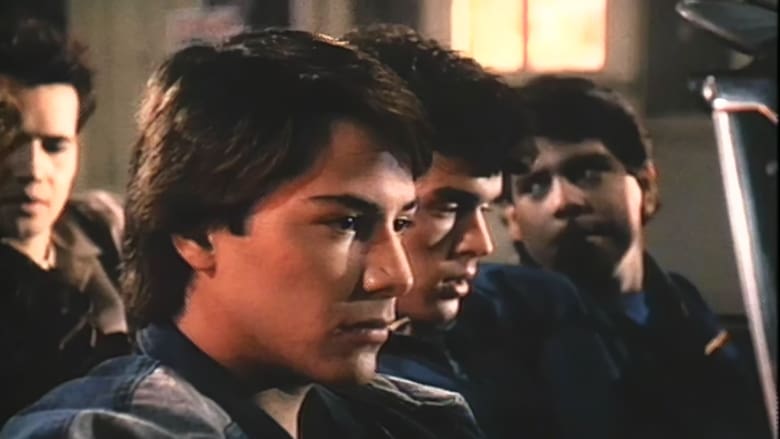
    What happens when high school frustration turns into vigilante justice? In this episode of The 80s Movie Podcast, host Edward Havens explores The Brotherhood of Justice (1986), a made-for-TV movie starring Keanu Reeves and Kiefer Sutherland that follows a group of students who form a secret society to punish crime and corruption at their school. As their mission escalates, the line between justice and violence begins to disappear.

    Along the way, we examine how the film reflects mid-1980s anxieties about youth violence, peer pressure, and institutional failure. In addition, we look at early performances from Keanu Reeves and Kiefer Sutherland before they became major film stars. The story builds tension as idealism shifts into authoritarian control, and the group loses sight of its original purpose.

    At the same time, we revisit how television movies of the era tackled controversial social issues with surprising intensity. Furthermore, we discuss why The Brotherhood of Justice remains a striking, often overlooked artifact of 1980s moral panic storytelling. Whether you remember it from its original broadcast or are discovering it for the first time, this episode revisits a dark and unusual entry in both actors’ early careers.

    (more…)